
Root and Folk Magic
Throughout the world there are pockets of longstanding communities that have eclectic magic traditions often centering around plant medicines and conjuring – the act of willing something into existence through spells and magic – which have been passed down for many generations. These communities are often vulnerable because of isolation and superstition and therefore, their magic traditions allow them to feel more empowered as well as more tightly connected to their loved ones – those on earth and those who have passed.
We are going to focus on a few traditions based here in North America. Many of which can be described as rootwork because they so deeply rely upon foraged plants in the making of products used in magic, the home, for health, and more.
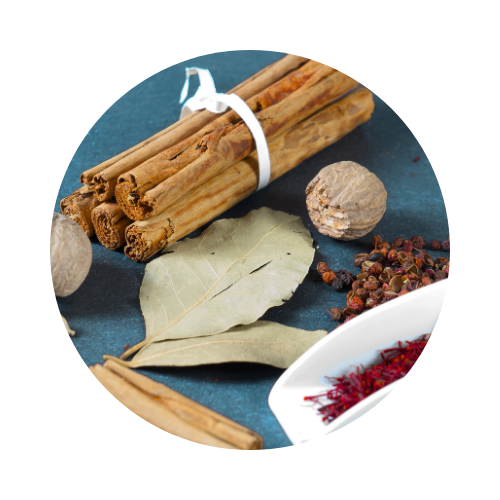
The joy of root work is that everyone has access to many of the basic roots, herbs and spices used in everyday magic
Hoodoo which is sometimes referred to as “low-country Voodoo” differs from Voodoo in that Voodoo is an actual religion and Hoodoo is a set of spiritual practices, traditions and beliefs that are the marriage of a number of cultures including Bakongo practices from Central Africa which came to the Americas during the slave years (it is believed that as many as 40% of slaves who made the dark passage of the slave trade were Bantu-Kongo and practitioners of that earlier tradition), some Islamic traditions from other African slaves who were kidnapped from Muslim countries, and Christianity which those slaves were forced to adopt. Santeria and Brujeria are also religious traditions and not specifically folk magic, that are associated with slave histories, Island religious traditions and some aspects of folk and family culture.
While Hoodoo has become synonymous with New Orleans, it likely has its cultural birthplace in the low-country of South Carolina but then slaves were sold and migrated into large plantations in other southern states, primarily Louisiana. As these slaves integrated with others on their plantations and surrounding areas, these low-country practices merged with Haitian traditions including the religion of Voodoo (a diaspora religion of the Africas rooted in ancestor worship, shamanism, Catholic Saint devotion, and Native American beliefs which melded together when Native tribes gave refuge and formed relationships with escaped slaves, and some freed slaves).
Hoodoo is magic of survival – again, magic primarily practiced by slaves and now the descendants of slaves. They use herbs, oils, brick dust, powders, roots, and even liquors to increase the potency of their spells. Those spells are conjuring in nature – attempting to acquire what they do not have, and to protect what endangers them. The infamous mojo bag which might contain any number of amulets and artifacts was carried by Hoodoo practitioners as a talismanic tool.
Pow-Wow or Hex Magic is a form a folk magic practiced among the Pennsylvania Dutch people – who live in the same region as the Amish but are a different sec (Pennsylvania Dutch folk being more superstitious perhaps). Their traditions descend from their Swiss and German ancestors and are based in pagan Germanic beliefs along with Christianity. Their holy book is the Holy Bible and their practice is very heavily rooted in the holy words. They use passages from the Bible as their spells, and they often use symbols known as Hex Signs which they paint on barns and trees and nearby fences to ward off bad spirits. There has been some increase in the practice of Pow Wow in recent years, just as all practices of magic have begun to grow.
Appalachian Magic (sometimes called Granny Magic) is a longstanding tradition that dwells in the Appalachian Mountains. It’s a mix of Irish, Scottish and Native practices along with German and old English traditions, blended with those of African Americans who lived among these mountain folk for decades, and even some Italian and Welsh immigrant practices all melded together into this tradition which really took hold during the Depression. Deeply superstitious, Appalachian or Granny Magic is all about everyday items and household chores. These are not elaborate rituals but rather, practiced routines using items you would have on the farm or in the home like horseshoes, brooms, rabbits’ feet. Healing – especially with plant medicines and herbs – is a very critical component of Appalachian Magic for a simple reason: these folks lived in nooks and crannies up in mountain regions where doctors often couldn’t travel. These were also poor people who couldn’t afford to go to the doctor or hospital. So, they had to care for their own – they had to deliver their own babies and heal the sick and tend the wounded with what they had available. The elder women became the high healers of these communities, deeply revered, and that is why it is often called Granny magic. They use a number of roots in their medicines including sassafras and yellowroot to treat their families and friends.


Likewise, Ozark Magic is another mountain-based insular tradition descended from similar cultures and heritages as that of Appalachian magic. They too use everyday household items in their magic practices including eggs (the women read lines and patterns in eggshells to tell the future), hold deeply superstitious beliefs about dropped or spilled items, and they fear a nighttime creature, a shapeshifter witch that they call the Booger Dog.
In some ways, we can also consider various Native American and First Nation practices to be forms of folk magic in part because there are so many different versions of magic used by communities depending on which tribes they descended from. Smudging, ceremonial smoke including in lodges, the reverence of animal totems – you are likely familiar with many Native American magical traditions some of which have become part of our cultural experience.
Which leads me into the topic of appropriation. Is it acceptable to use the traditions of people and cultures that you do not come by naturally? Can you practice Hoodoo if you are not descended from slaves, Appalachian magic if you are not from the mountains of Tennessee and Kentucky, or part of an honored Native American tribe?
This is part of a larger conversation that we have been having in the world of magic particularly since the summer of 2020 and the murder of George Floyd. I have seen practitioners and schools and vendors make great effort in the past couple years to be more inclusive but also to question whether everyone has the birthright to just adopt whatever traditions they want.
And let’s be clear, most of us who do practice magic are practicing some kind of blend or amalgamation of magical practices. Including myself. But because folk magic is identified with at-risk communities particularly people of color and people in poverty, it’s important to understand how deeply held these beliefs are and therefore, how deeply uncomfortable long-standing practitioners of these forms of magic are when newbies just show up to buy a mojo bag and brick dust, or start conjuring. It’s the equivalent of showing up to Coachella in an Indian headdress or dressing as a Gypsy for Halloween. Not cool.

So, what is appropriation and how do we address it respectfully while trying to learn from other cultures?
“Cultural appropriation is the adoption or theft of icons, rituals, aesthetic standards, and behavior from one culture or subculture by another.
– American Indian Health & Family Services organization
One word I would use to describe classic appropriation is fetishize. Are you interested in learning about traditions other than your own because you want to become well-versed in many fields of magic and the mystic arts? When you talk about hexes or sweat lodges or conjuring, are you fetishizing or idealizing these practices and the tools that they use?
For instance the use of smudging and specifically of sage. Did you know that until 1978, North American tribal nations were forbidden to burn sage and now with increasing demand of white sage by ahem white people it’s making it harder for native peoples to acquire it and use it in their own longstanding and deeply sacred practices?
This isn’t about guilt tripping anyone. If you are interested in a practice and want to learn it, I don’t discourage you. I use sage, for instance. But I’ll tell you my personal belief and practice:
Don’t do it for profit.
So, I do smudging and other traditions that are not rooted in the Anglo-European traditions or Ashkenazi Jewish customs that I descend from. I incorporate my familial traditions in my magical work and in my daily rituals, but I also do use other practices and customs. Just not for profit.
I formerly lived in a place that had a strong Native American community and some of my clients were Native. Every Saturday night I would do a ritual working that started with clearing my desk. Physically clearing my desk, powering down my computer (the only time I do so during the week) and wiping my desk clean, sweeping under it, taking out the trash, etc.
I then did a ritual at my desk specifically intended to honor my clients and bless their efforts. I did not do this to serve myself, but to thank those who trusted and supported me professionally. So I would use smudging because some of my clients were Native American and I used anointed candles to honor African American clients and contractors, and other practices to celebrate that fact that were it not for many people of many cultures, I would not be able to thrive in business. My clients didn’t know I did this. I had no reason not to tell them, if it came up in conversation but I didn’t solicit this to them out of any sense that they should be grateful. It is me who had gratitude and I used a small number of traditions from other magical practices beyond my own incorporated in that allow me to make a wider gesture of thanks for my blessings.
So, what traditions are acceptable for you to practice? Obviously, start with the ones that you inherit. If other traditions come naturally into your lives – meaning that friends or loved ones bring them in, honor them and utilize them if it feels appropriate. If you want to learn others, ask for help.
A question that has come up is: what if I think I am reincarnated? Is it acceptable for me to practice the magic traditions of that culture that I believe I once lived?
I can’t answer that question and frankly, I don’t think you can answer it on your own. Again, ask for help. Reach out to someone who is an experienced magician and elder and teacher and explain why you want to learn their traditions.
But be prepared to honor their answers, even if they aren’t what you were hoping for.
Follow us at Facebook and Instagram for more astrological insights!
Dive into your daily magic or journaling - without having to look anything up!
Discover the energies of each day of October 2026 including numerology, associated chakras, Sun, Moon and other astrological energies, recommended crystals, and a Tarot prompt for each day. This is the perfect companion piece for anyone who journals either for magic or for meditation. Only available until October 22, 2026 when the November Grimoire Companion launches.