
Building Altars
We talked about Altars in the blog on Sacred Spaces. This gives us an opportunity to revisit those themes and suggestions in a more practical way.
When creating your Sacred Space, you get to define what is sacred and you get to define what is Space.
There are many images that may inspire the altar you wish to create. But remember, your altar will evolve. I think it’s important that you focus less on what it looks like and more on how it serves you.
Start by determining what your intention is for your altar
Then what you want the energy in that space to feel like
Then begin bringing in items that are useful and meaningful
Let’s go back to that:
First determine your intention. You don’t have to decide on what particular practice of magic speaks most to you. You may incorporate elements of Wicca, of the Mystery Tradition, of paganism, of root magic, of alchemy, of whatever you like. But start by determining WHY you are drawn to magic. What is it that you are hoping to accomplish?
Create an altar that aids with your intentions
Are you looking to heal something?
Are you looking to enhance something?
Are you seeking protection?
Do you need clarity?
What are your reasons, your Why?
Okay, once you know WHY you are drawn to magic and the mystical arts, and have a sense of what direction you may be heading in, it’s time to decide what you want your altar to feel like
I shared these same words when I talked about Sacred Space:
Ceremonial
Peaceful
Colorful
Isolated
Invigorating
Soothing
If you have a lot of chaos in your life and you want to make order and sense of it, I would suggest creating space that is free of distraction and peaceful, controllable. If you are drawn to this work because you seek physical or emotional healing, then maybe your sacred space needs to feel vibrant and alive. If you are leaning toward magic because you wish to make changes in your life, create a sacred space that is versatile and evolving
Once you know what your intention is right now with magic, or meditation (and it will of course evolve and change over time), then you can begin to determine WHERE you want your sacred space to be.
If you have been unwell and want to restore your health, maybe your sacred space is in your garden.
If you deal with PTSD or an anxiety disorder, you might put your sacred space in a walk-in closet, where you can isolate yourself and control your environment.
If you live with a bunch of people, you might just need to create the space wherever there is room and privacy. A corner of your bedroom, or the kitchen pantry, or the storage room that nobody else goes into. The only place I don’t recommend placing your altar is in the bathroom. Remember that your magic practice will evolve over time, as will your altar and your purpose. Where you place your altar may change as well – although I would caution against too many relocations!
So, choose your spot knowing that you may choose another, some weeks or months or years later, if it feels right.
Wherever you decide will be your sacred space just has to feel right and natural and easy to you. It has to help fulfill your intention and it has to be a space that you can and will work within.

The next thing is to decide WHAT your altar or space will be.
I really like the idea of buying an old cabinet or chest of drawers and refinishing it so that you can really personalize it. Paint it in wild colors, or glue some crystals on the knobs. Create a tile mosaic or whittle into the wood in some meaningful way.
I would recommend that you have something that feels intentional even if it’s just a tiny little space for right now. Create an altar that you can go for at least a few minutes a day and either sit beside it or stand in front of it, or kneel upon it, or lounge around it, or however you can be in the presence of that space. I want you to start feeling comfy in that space, I want you to feel safe, and I want you to begin to feel empowered there.
To do all that, let’s talk about the tools you are placing upon your altar. If you have a chest of drawers or cabinet like mine, you’ll also wind up putting items inside – items that you use occasionally or even daily – but the items on top are there to get you in your preferred mood so that you can do the work you have decided to do and your most important tools are accessible.
The items or tools upon your altar are going to be grouped as following:
Elemental
Sacred or Personal
Useful
For elemental, I recommend having each of the five elements upon your altar.
Fire: Can be a candle or incense burner, or tools for smudging.
Earth: Crystals, a wooden bowl, a plant.
Air: Incense or a feather or fan.
Water: A bowl, some sea salt, or a small fountain.
Spirit: An image of a Saint, a statuette of the Buddha, a painting of the clouds.
Some of your tools will be used, others are there to essentially get you in the mood. Over time, you will find that your tools become more useful rather than mood-enhancing.
Next, I recommend placing at least one item that is sacred or personal upon the altar. What sacred items might you place at or upon your altar, that still go along with your intention? Sacred items should be personal, deeply meaningful, even that bring up emotions. Some sacred items you might choose to store away when you are not using them, and that’s okay.
Next, you are going to place items that are useful in your practice. I’ve written about being cautious of sharing your tools with those who have not earned the right to see them. A candle, a feather, a bowl of water, a crystal – those (to others) might just look like décor and therefore they aren’t necessarily sacred or personal. If you share space with others, it’s fine to leave just those items on your altar and place all others away. Certainly, you may not feel comfortable sharing your sacred items in the view of others.
The elements are a form of honorific – you are acknowledging the truth of the world you live in which include the elements of fire, earth, air, water and spirit.
The sacred items are there to help you remember your WHY and your intention with your practice. They touchstones, and talismans, that reconnect you with your purpose in magic.

But your tools are there to be useful – to be practical – and to be powerful. So I definitely would caution you to place them away when not in use if you feel like prying eyes will make you feel uncomfortable about those items or less powerful.
Some of the tools you will use in magic and ritual work may include:
Your grimoire or magic journal (some call it a Book of Shadows)
The Square and Compass (a freemason symbol used in many magic practices)
Charts and diagrams (like Natal Charts or Pentagrams)
Consecrating Tools (items used to bless or protect other items, like salt)
Swords or Knives (used for cutting cords and other symbolic rituals – we will be talking about cutting cords and banishing rituals next week by the way)
Wands (whether tree limbs or crystal, typically used in Air rituals or for pointing)
Singing Bowls (typically used in meditation or yoga but also in ritual work to create a clear bell-like sound). Some people have bells on their altars.
Chalice (an ornamental cup perhaps filled with water or wine, used in ritual work and not just as décor)
Books on magic and other practices
Oracle and Tarot Cards
Other items for divination or scrying
Candles including colored and shaped candles that you use in ceremonies
Ceremonial clothing such as cloaks or robes or sashes
Crowns and headgear
Many wiccans place an actual broom at their altar (it’s lovely in the fall to get one of those cinnamon brooms so that they also fragrance the air)
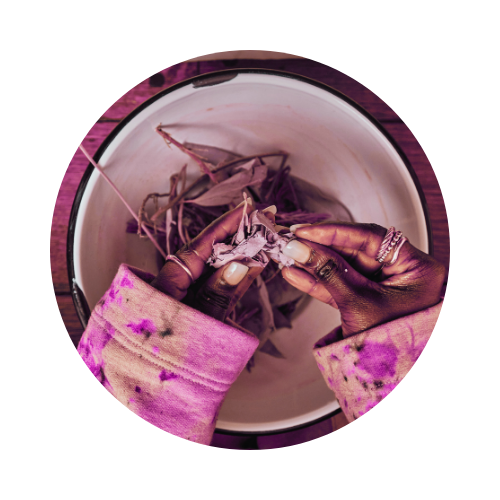
Mortar and Pestle (if you do root or herbal magic, you may keep some of those items and the tools that you’ll use to process them at your altar)
A pendulum – which is essentially an item that is suspended from a chain (often a metal or crystal point) used to provide answers, choices, clarity. You can suspend your pendulum above several others to see which one it eventually comes to rest over, or you can use the old folk magic method – if it swings back and forth it is male/yang/force/solar and if it swings in a circle it is female/yin/form/lunar and that should help you decide which of two or more options you are looking at.
Again, some of your elemental items may also be tools and vice versa.
As your practice develops you will find yourself adding more items to your altar, changing items, upgrading, and enhancing. All that is to be expected.
Look at the Tarot cardThe Magician: What do you see?
He is strong, he is standing straight, he is standing in the position we to begin the Qabalistic Cross.
What is in front of him? An altar. What is upon that altar? The Four elements of Fire (represented by the wands), Earth (represented by the Pentacle), Air (represented by the sword) and Water (represented by the Cup)
What is above his head? The Infinity symbol – the representative of the Divine Source and the infinite energy and light. It sits above his head at his higher crown, between him and God and connecting him and God. He holds a double candle – lit at top and bottom and the garden grows both above him and below
As above, so below
That is what the magician seeks is balance. Whatever your purpose for being drawn into magic, for creating sacred space including an altar, and for your ritual and meditation workings, you always have to strive for balance. Force and form. Yin and Yang. Masculine and Feminine. Lunar and Solar. As you begin to build your altars, think about these relationships of balance. What elements of force, form, yin, yang, masculine, feminine, solar, lunar can you place upon your altar and use in your rituals to reflect the balance you are seeking and your commitment to restoring balance wherever you see an imbalance occurring – in magic and in life?
Be sure to follow us on Facebook and Instagram, and subscribe to our weekly email newsletter so you receive your astrological forecast every Sunday.
Dive into your daily magic or journaling - without having to look anything up!
Discover the energies of each day of October 2026 including numerology, associated chakras, Sun, Moon and other astrological energies, recommended crystals, and a Tarot prompt for each day. This is the perfect companion piece for anyone who journals either for magic or for meditation. Only available until October 22, 2026 when the November Grimoire Companion launches.