
Why Church Authorities Feared the Tarot
Tarot has always carried a mystique — images of cloaked figures, powerful archetypes, and hints of the unknown. But for centuries, tarot’s presence in Europe was met with suspicion, fear, and even persecution. Religious authorities saw tarot not only as a forbidden game, but as a dangerous symbol of rebellion, heresy, and unregulated spiritual power. This cultural tension gave tarot a shadowy reputation that still lingers in public imagination today, long after the cards themselves moved into the spiritual mainstream.
Tarot and the Fear of Forbidden Knowledge
At the heart of the Church’s unease was the belief that tarot carried hidden, unlicensed spiritual knowledge. The images seemed to bypass formal religious dogma, offering direct access to meaning and symbolism beyond the Church’s control. As the occult revival took root in Europe, the cards became linked to mystical practices, fortune-telling, and secret societies. That was threatening to religious authorities who claimed to be the gatekeepers of spiritual truth. For them, tarot felt dangerous not because it was evil, but because it put spiritual power back in the hands of the people.
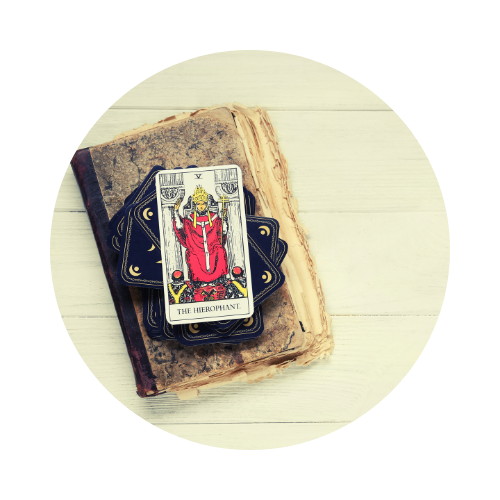
Does the Tarot carry hidden spiritual knowledge?
Condemnations and Moral Panic
During the rise of moral panics in the late medieval and early modern periods, anything that looked even vaguely mystical could be branded diabolical. Tarot was no exception. Its figures — the Magician, the Devil, the Hierophant — could easily be twisted into proof of sorcery or witchcraft. Church edicts warned against card playing, especially cards that seemed to blur the lines between everyday life and the sacred. Tarot found itself burned, banned, or hidden away, fueling an aura of mystery that only made it more intriguing to those who craved secret wisdom.
The Tarot’s Resilience
Despite suspicion and occasional condemnation, tarot refused to disappear. The cards traveled underground, kept alive by mystics, gamblers, and storytellers who recognized their power. Over time, as Western societies shifted toward more personal spiritual exploration, tarot resurfaced — no longer a forbidden object, but a celebrated tool of intuition and empowerment. In many ways, the centuries of fear only strengthened tarot’s pull, turning it into a symbol of personal freedom and spiritual sovereignty.
What truths in your own life might feel threatening to others — simply because you dared to claim them for yourself?

A personal reading with Divinely Designed will include Tarot or Oracle Cards, astrology forecasts, and other intuitive services. Each reading will vary by client and may include individual recommendations.
The Church’s fear of tarot was, in the end, a testament to its power. When ordinary people could hold a deck of cards and feel connected to something greater, something timeless, it challenged every gatekeeper. Today, we honor tarot’s journey from persecuted object to beloved companion. Its images, once scorned, now guide countless people toward healing and growth. The next time you shuffle your deck, remember those who risked their safety to preserve its mysteries. Tarot has survived centuries of shadows — and still shines with the promise of personal liberation.