
It's Alive (Sort Of): On Practicing With Parts You Never Actually Learned
Part 3 of 6 in the Monsters Among Us series
Mary Shelley's creature never gets a name. Victor Frankenstein assembles him from parts scavenged off the dead, charges him to life in a single thunderous instant, and then — this is the detail people forget when they picture Boris Karloff lumbering around with neck bolts — immediately abandons him. No instructions. No context for the body he's wearing. No one to explain what any of it means or how to live inside it responsibly. He's left to wander the world running entirely on borrowed pieces and instinct, doing his best with components he never chose and was never taught to use.
It's the most sympathetic monster story ever written, and it doubles, almost too neatly, as a warning about a very specific kind of spiritual practitioner.
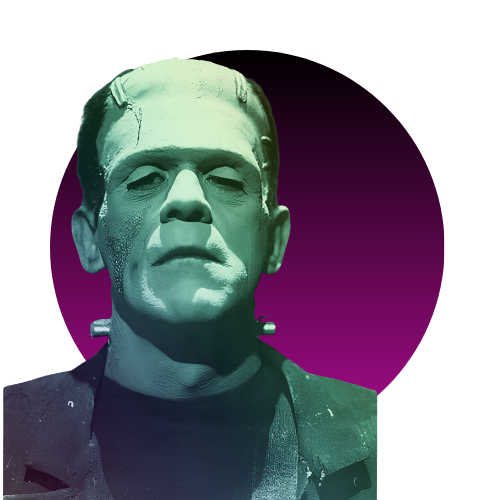
Boris Karloff in 1931’s Frankenstein
You've met this one. Maybe you've been this one. The person who took a weekend Reiki certification, watched several hours of tarot videos, bought a tumbled-crystal starter set, absorbed some shadow-work vocabulary from a podcast, and emerged offering "energy healing sessions" that braid all of it together into something that sounds impressively fluent and is, underneath the language, structurally hollow. Not a fraud exactly — that's the Charlatan, three posts from now, and he's a different and more deliberate kind of harm. This is gentler and sadder: someone genuinely trying to help, stitched together from fragments of traditions they never fully studied, animated by real enthusiasm and missing the connective tissue that actual training would have provided.


The 1931 James Whale film gave us the iconography everyone still uses — the flat-topped head, the bolts, the groaning lurch — but it also gave us the moment that matters most for this metaphor. The creature reaching for sunlight, for a flower, for the little girl by the lake, wanting connection and warmth and getting, almost every time, a torch-wielding response instead. He isn't cruel. He's improvising a self out of mismatched parts in front of people who can tell something is off and react with fear rather than patience. That's the real cost of practicing this way — not just to the practitioner, but to whoever's on the receiving end of well-meant work that was never actually whole. A Reiki session from someone who skipped the lineage and the hours of supervised practice isn't healing, even when it's offered with a full heart. A tarot reading from someone who learned the cards' "meanings" from a single quick-reference list, with no grounding in the symbolism, the elements, or the questions underneath the question, isn't a reading. It's a guess wearing a costume.
This is not an argument for gatekeeping every spiritual path behind years of credentialing before anyone's allowed to light a candle. Plenty of real practice begins exactly this way — curious, self-taught, assembled from books and mentors and trial and error. The difference is whether you keep going. Whether the borrowed parts eventually get studied, understood, integrated, and earned, or whether they just get worn, indefinitely, as a costume mistaken for a body.
Three Questions Before You Offer The Work
1. Could you explain the "why," not just the "what"?
Anyone can repeat that the Tower card means upheaval. Can you explain why upheaval lives in that specific image, in that position in the deck, in relation to the cards around it? If not, you're reciting, not reading.
2. Who taught you, and would they vouch for how you're using it?
A real lineage has a name attached to it. If you can't trace your training back to an actual teacher, tradition, or course who'd recognize their own teaching in what you're now offering, that's worth sitting with honestly.
3. Are you still learning, or did you stop the day you started charging?
There's no shame in being a beginner. There is real harm in presenting beginner knowledge as mastery because a certificate or a confident tone made it feel official enough.
Shelley's creature spends the entire novel asking, in his own way, to be made whole — to understand what he is instead of just existing as an assembly of borrowed pieces nobody explained. That's not a monstrous question. It's the right one. The tragedy isn't that he was stitched together. The tragedy is that nobody ever finished the work of teaching him what he'd become.
Don't leave your own practice on the table mid-stitch. Go back and learn the rest of it.
Next in this series: The Werewolf — what happens when the shadow runs the room.
Dive into your daily magic or journaling - without having to look anything up!
Discover the energies of each day of October 2026 including numerology, associated chakras, Sun, Moon and other astrological energies, recommended crystals, and a Tarot prompt for each day. This is the perfect companion piece for anyone who journals either for magic or for meditation. Only available until October 22, 2026 when the November Grimoire Companion launches.