
Junk Magic
When we say that someone is practicing magic, that really means they are just exploring. There is nothing wrong with practicing or exploring magic, although it may not be yet at its peak power. If you are learning magic and beginning different practices, you are a magic practitioner.
But once you begin to really work the magic, to step into your power, to use the rites and rituals of your chosen field of magic and to experience results from those rites, you are no longer a practitioner. You aren’t practicing anymore. At that point I would say you are working magic (doing magical workings) and you are a magician, not a practitioner.
There are a lot of practitioners out there who dabble at the magical and mystical arts. Some do so for very good reasons – they want to learn and aren’t sure what field will most attract them. They’re a solo practitioner, trying to learn the ropes without a mentor or egregore. They have multiple fields of interest and want to find out which will speak most powerfully to what they wish to do.
And then there are magicians, who in essence have found their way and are doing the work. Some of them may work in multiple fields or schools of magic. Some of them are solo practitioners, some of them are still learning.
What I want to discuss is the ethics of being both a practitioner and a magician.

Practitioners, or those who new to magic and still seeking, need some ethical boundaries to help them search and find the rituals and practices that will become part of their magical workings. Because so many practitioners are solo practitioners, it’s important to share these guidelines and boundaries. You may already feel like you’re stumbling around the dark as it is, just trying to find what field of magic is going to work best for you and which rites and rituals make the most sense for your intentions, and what tools and altars and crystals and energies you’re going to build a practice from. So the last thing you want to do is operate in a double-blind situation – blind in terms of the work itself and blind in terms of how to navigate it honorably.
There are so many books and other information out there on this tradition and that ceremony and this spirit and that influence. How do you know what is right for you to practice, especially if you don’t have a teacher or tribe to lean upon, to learn from?
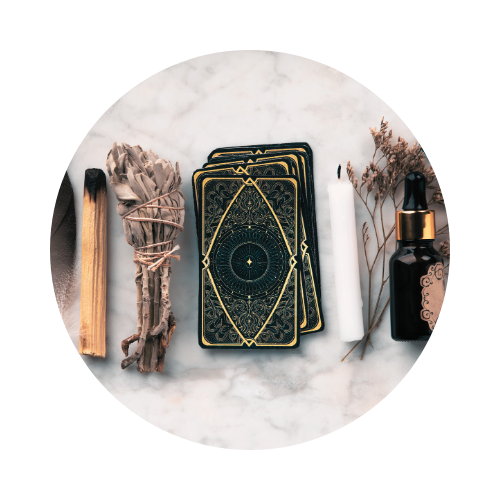
There is a lot of magic out there that feels very showy to me. There’s a whole lot of smudging and deity worship and candle configurations and beautiful $300 crystals sitting up on mantles. It’s very prevalent on social media. People seem to be staging a scene from a movie when it comes to how they present their altars and magical spaces, their tools and even their workings. Is it effective? Hard to say behind all that smoke and mirrors and Anubis statues and flowy white robes. It sure is pretty, I’ll give them that. Maybe some of it actually works. Maybe some of it is pure. But if it’s being filmed or photographed in such a highly staged way, it seems suspect to me.
That doesn’t mean you can’t have a beautiful altar, or many gorgeous crystals around you. You want to deck yourself out in Moroccan caftans and hold giant ostrich feathers behind a haze of palo santo smoke, you go for it.
The first rule of avoiding Junk Magic: You can’t care what it looks like. It may wind up being as beautiful as a movie set, but that’s not the goal. Your tools won’t look like they cost thousands of dollars. Your altar may be just a repurposed bookshelf. You might be just wearing your regular clothing. I do. And you may be beginning with just one ritual or one rite, slowly finding what comes next. Congratulations, you’re on the way to becoming a magician.
If you want to be a magician, start with just this:
· A grimoire or journal in which to record your workings and your thoughts around them
· An altar or sacred space
· A short meditation at the start of your practice to set your intention and find clarity and/or grounding
· Four objects: one each representing fire, earth, air and water elemental energies. I suggest a candle, a crystal, some incense and a bowl of water. Easy peasy.
· One rite or ceremony. The LBRP is a great beginning ritual for any new practitioner. It is a banishing ritual that allows you to feel more empowered, by declaring what is and is not acceptable within your sacred space or temple.
As you begin your magic journey, you’re not going to know all the different fields of magic. You’ll hear terms like paganism, wiccan, mystery traditions, rootwork and folk magic, hermeticism.
The second rule of avoiding Junk Magic: don’t be a dabbler, but do explore. You likely won’t know what is going to be most powerful and profound for you until you’re actually doing it.
This takes us into the issue of Appropriation: Is it acceptable to use the traditions of people and cultures that you do not descend from? The truth is, most of us who practice or work magic blend different forms of magic. Including myself.
So, what is appropriation and how do we address it respectfully while trying to learn from other cultures?
“Cultural appropriation is the adoption or theft of icons, rituals, aesthetic standards, and behavior from one culture or subculture by another.
– American Indian Health & Family Services organization
The word I most use to describe unacceptable appropriation is fetishize. Are you interested in learning about traditions other than your own because you want to become well-versed in many fields of magic and the mystic arts? Or are you looking to claim practices because they look powerful? When you talk about hexes or sweat lodges or conjuring, are you fetishizing or idealizing these practices and the tools that they use?
A reminder that until 1978, North American tribal nations were forbidden to burn sage and now with increasing demand of white sage by non-natives, it’s harder for native peoples to acquire it and use it in their own longstanding and deeply sacred practices. Not cool.
This isn’t about guilt tripping anyone. I do smudging and other traditions that are not rooted in the Anglo-European traditions that I descend from. I just don’t do it for profit, and I don’t put it on blast.
Third rule of avoiding Junk Magic: If you’re more concerned with how things look, you’re probably doing it wrong.
Junk magic is anything that simply put, isn’t effective. It could be because it’s too showy, too flashy, too superficial, uses too many different traditions, or is inappropriate in any way. For all these reasons, most importantly, this magic is going to be minimally effective if at all.
If it is effective, it still won’t accomplish what you set out to do.


The problem is, if these issues are in place, it’s probably because you didn’t set a clear and direct intention. That is the first step in any daily or other magical working.
What do you wish to achieve? When you know this first, you work with the magic and elements available to you rather than trying to create some interesting mystical tableau of artifacts and rituals and clouds of smoke.
Begin your magical workings with an intention. It can be really, super specific like “I want to overcome my addictions” or “I’d like to honor this ancestor who recently passed” or “I’d really like to be in a nicer and more comfortable home within a year.” Or it can be general: “I’d like to raise this community”, “I wish to be more grounded” or “I want to generate abundance.”
The fourth rule of avoiding Junk Magic: give it your all. If you’re creating a magical practice that is superficial and showy, it means you’re holding back. You’re not actually being magic which is the real goal. We don’t do magic. We are magic. Magical practices and workings are simply there to help us be more magic.
I just want to say that magicians are not held to some rigid formulas. You have the liberty to explore, to create, to experiment and you should be doing all that. Learn about other practices. Find honorable ways to explore them, to discover if there are meaningful reasons to incorporate them into your traditions. Folks from the Western Mystery Tradition use a lot of eastern traditions such as meditation, and Tattvas, a working known as the Radiant Breath. Many Wiccans use root and herbal magic. Many pagans work with crystal energies. It’s okay to blend practices, in honorable and ethical ways.
The last rule of avoiding Junk Magic: Let your magical workings develop as slowly as possible. If you’re adding in a new rite every month, or buying crystals every week, or you’ve redone your altar three times in the past year – you aren’t letting yourself become more magical. You’re trying to control your magic and set the scene. The spirits don’t care about the scene. Start small and slow. Don’t worry about what things look like. Have your grimoire or journal, your elements represented, a short meditation and set an intention. You don’t have to spend an hour conjuring in order to be magic. You just have to invest your energy, your thoughts, and your spirit in the real work of magic.
Are you following this site for our ongoing blog, or at Facebook and Instagram?
Dive into your daily magic or journaling - without having to look anything up!
Discover the energies of each day of October 2026 including numerology, associated chakras, Sun, Moon and other astrological energies, recommended crystals, and a Tarot prompt for each day. This is the perfect companion piece for anyone who journals either for magic or for meditation. Only available until October 22, 2026 when the November Grimoire Companion launches.